
• 99%+ purity, third-party tested
  • Malaysia-based supplier, fast local delivery
  • Order online, confirm and pay on WhatsApp
  • For research use only
  • 99%+ purity, third-party tested
  • Malaysia-based supplier, fast local delivery
  • Order online, confirm and pay on WhatsApp
  • For research use only

All products are for laboratory research use only. Not for human consumption.

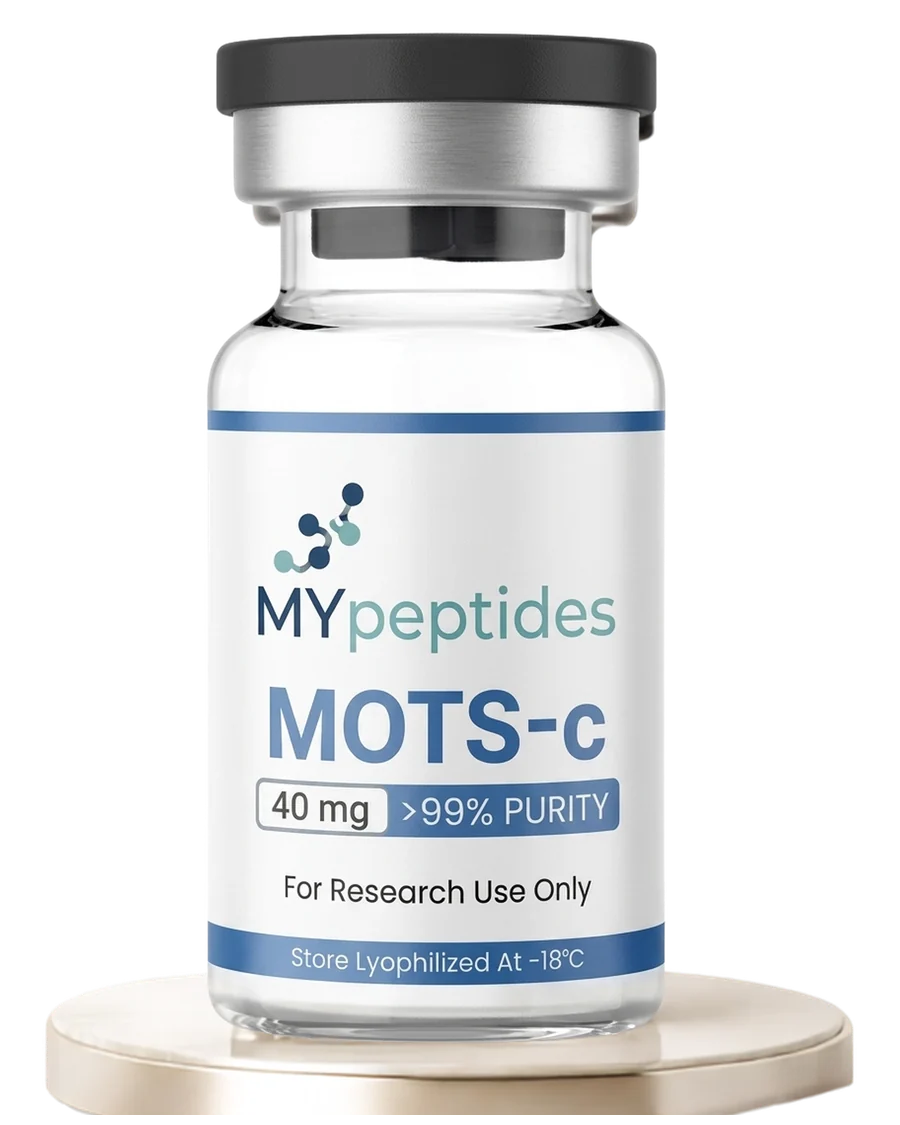
MOTS-c 40 mg vial

Longevity · Longevity Metabolic

The Metabolic Catalyst

MOTS-c

  • 40 mg
  • >99% purity
  • Lyophilised

RM 480

Awaken your cellular powerhouse. MOTS-c 40 mg ignites mitochondrial vitality, resetting your metabolism from the very source of your energy.

Key mechanisms & benefits

  • By mimicking the benefits of movement, it boosts endurance so you stay active, vibrant, and deeply recovered.
  • It optimizes glucose utilization and fat burning, granting you effortless control and steady, all-day vitality.
  • It neutralizes oxidative stress to protect your cells, leaving you glowing, resilient, and beautifully ageless.
1
Ask about this product

For research use only. Not for human or veterinary consumption. This product is not a medicine and is not intended to diagnose, treat, cure or prevent any disease.

Overview

The Mitochondrial Longevity Signal — The Only mtDNA-Encoded Peptide Hormone

MOTS-c is uniquely encoded in the mitochondrial 12S rRNA gene — the only peptide hormone known to be encoded in mitochondrial DNA rather than nuclear DNA. This means it directly bridges mitochondrial function and systemic physiology. It activates AMPK (the master metabolic switch), improves insulin sensitivity, and has extended lifespan in multiple model organisms.

Mechanism of action

AMPK Activation

Master Metabolic Switch

AMP-activated protein kinase — the primary caloric restriction mimetic pathway

  • Direct AMPK activation — the central energy-sensing enzyme
  • Mimics the molecular signature of caloric restriction without restriction itself
  • Promotes mitochondrial biogenesis and quality control (mitophagy)
  • Inhibits mTOR — the primary pro-aging growth pathway
  • Shifts metabolism from glucose to fat oxidation (metabolic flexibility)

Insulin Sensitivity

Glucose and Metabolic Regulation

Improvements in insulin signaling and glucose uptake across tissues

  • Improves insulin sensitivity in skeletal muscle — GLUT4 translocation
  • Reduces hepatic glucose production (gluconeogenesis)
  • Normalizes blood glucose in type 2 diabetes animal models
  • Reduces lipid accumulation in adipose and liver tissue
  • Activates FOXO transcription factors via AMPK
Mitohormesis

Mitochondrial Stress Response Pathway

MOTS-c activates beneficial adaptive responses from mitochondria to nucleus

  • Activates mitochondrial hormetic stress response pathway
  • Modulates nuclear gene expression from mitochondrial DNA signal
  • Unique cross-organelle communication: mtDNA → nuclear transcription
  • Promotes mitochondrial membrane potential maintenance
  • Activates antioxidant defense pathways via mtDNA-nucleus crosstalk

Key finding MOTS-c is the only peptide hormone encoded in mitochondrial DNA — not nuclear DNA. This means it directly reports mitochondrial status to systemic physiology, creating a communication pathway that no nuclear-encoded peptide can replicate. AMPK activation mimics caloric restriction at the molecular level.

Key research findings

42%

Lifespan extension in C. elegans MOTS-c treatment — established as longevity-promoting peptide

Lee C et al. Cell Metab, 2015
mtDNA

First and only peptide hormone known to be encoded in mitochondrial DNA — novel intercellular signaling

Lee C et al. Cell Metab, 2015
AMPK

Direct AMPK activation with downstream mTOR inhibition — molecular caloric restriction signature

Kim SJ et al. Nat Commun, 2021
Insulin

Restored insulin sensitivity and reduced visceral fat in high-fat-diet induced obesity mouse models

Kim SJ et al. Nat Commun, 2021

Research areas

Longevity and Aging Research

MOTS-c directly connects mitochondrial function to systemic aging — the most fundamental longevity signaling pathway.

  • Lifespan extension research
  • Mitochondrial aging models
  • AMPK longevity pathway studies
  • Caloric restriction mimicry research

Metabolic Disease

Type 2 diabetes, insulin resistance, and obesity — MOTS-c addresses all three via AMPK and metabolic flexibility.

  • Type 2 diabetes models
  • Insulin sensitivity studies
  • Obesity and visceral fat research
  • Metabolic syndrome models

Mitochondrial Biology

MOTS-c is a unique research tool for studying mtDNA-to-nucleus communication — a fundamental but poorly understood pathway.

  • mtDNA signaling research
  • Mitochondrial-nuclear communication
  • Mitohormesis models
  • Mitochondrial biogenesis studies

Exercise and Performance

MOTS-c levels rise with exercise — it may mediate some of exercise’s metabolic benefits.

  • Exercise-mimetic research
  • Metabolic flexibility studies
  • Muscle metabolism research
  • AMPK activation protocols

Safety profile

MOTS-c is an endogenous peptide encoded in human mitochondrial DNA. Human safety data is limited — most available data is from animal models.

  • Caution
    Hypoglycemia

    AMPK activation and insulin sensitization may lower blood glucose — monitor in fasted research models

  • Low
    mTOR inhibition

    mTOR suppression has immune implications — note in immunological research models

  • Low
    Exercise interaction

    MOTS-c levels rise with exercise — may amplify exercise metabolic effects

  • Low
    Limited human data

    No human clinical trials completed for MOTS-c — extrapolate from animal data

Animal studies
Well tolerated — no toxicity findings
Human data
Observational only — no RCTs
Endogenous
Present in all mitochondria-containing cells

Theoretical contraindications in research models

  • Severe hypoglycemia risk — AMPK activation lowers glucose
  • Active mTOR-dependent therapy — mechanistic interaction
  • Conditions requiring anabolic signaling — mTOR inhibition is anti-anabolic

Molecular profile

MOTS-c Structure

Full name
Mitochondrial Open Reading Frame of the 12S rRNA Type-C
Amino acids
16
Molecular weight
2,174 Da
Genomic origin
Mitochondrial 12S rRNA gene
Human homolog
Yes — endogenous peptide

Biological Properties

Primary target
AMPK (direct activation)
Downstream
mTOR inhibition, PGC-1alpha
Origin
Mitochondrial DNA (unique)
Expression
All mitochondria-containing cells
Exercise response
Levels rise with aerobic exercise
Age relationship
Declines with age in humans

MYpeptides specification

Strength
40 mg
Purity
> 99%
Form
Lyophilised powder
Storage
Store lyophilised at −18 °C
Status
For research use only

Frequently asked questions

Why is mitochondrial DNA encoding so significant?

Almost all proteins and peptide hormones are encoded in nuclear DNA — approximately 25,000 genes. The mitochondrial genome contains only 37 genes. MOTS-c being encoded in the mitochondrial 12S rRNA gene means it directly reflects mitochondrial activity and health. It creates a direct bridge between mitochondrial function and systemic hormonal signaling — a unique communication channel.

How does MOTS-c activate AMPK?

MOTS-c enters the nucleus and activates AMPK through a mechanism involving the ARE (Antioxidant Response Element) pathway. AMPK is the master energy sensor that becomes active when cellular energy (ATP) is low relative to ADP/AMP. MOTS-c mimics this low-energy signal, activating all of AMPK’s longevity-promoting downstream effects including mTOR inhibition and mitochondrial biogenesis.

How does MOTS-c relate to caloric restriction?

Caloric restriction extends lifespan in virtually every model organism studied — primarily by activating AMPK and inhibiting mTOR. MOTS-c activates the same AMPK pathway through a distinct mechanism, producing the molecular signature of caloric restriction without restricting calories. This makes it a pharmacological caloric restriction mimetic — one of the most sought-after concepts in longevity research.

What is the 42% lifespan extension claim from?

The 42% lifespan extension figure comes from C. elegans (roundworm) studies where MOTS-c was administered to the culture medium. C. elegans is a standard model organism for longevity research because of its short lifespan (3 weeks) and well-characterized genetics. While C. elegans data does not directly translate to humans, it establishes MOTS-c as a genuine longevity-modifying compound.

Does MOTS-c increase in response to exercise?

Yes. Human plasma MOTS-c levels increase with acute aerobic exercise. This has led to the hypothesis that MOTS-c may be one mechanism by which exercise produces its metabolic benefits — essentially acting as a mitochondrial hormone that signals the beneficial effects of physical activity to tissues that were not exercising.

References

  1. MOTS-c: a mitochondrial-derived peptide regulating muscle and fat metabolismLee C et al. Cell Metab, 2015 · PMID: 25738458
  2. MOTS-c is an exercise-induced mitochondrial-encoded regulatorKim SJ et al. Nat Commun, 2021 · PMID: 33461188
  3. Mitochondrial peptides in aging and metabolismYin X et al. Trends Endocrinol Metab, 2021 · PMID: 33413952
  4. MOTS-c as a novel therapeutic candidate for metabolic diseasesHu B et al. Pharmacol Res, 2022 · PMID: 35430362
Longevity

The Cellular Powerhouse

NAD+

1000 mg · >99% purity

RM 460