• 99%+ purity, third-party tested
  • Malaysia-based supplier, fast local delivery
  • Order online, confirm and pay on WhatsApp
  • For research use only
  • 99%+ purity, third-party tested
  • Malaysia-based supplier, fast local delivery
  • Order online, confirm and pay on WhatsApp
  • For research use only

All products are for laboratory research use only. Not for human consumption.

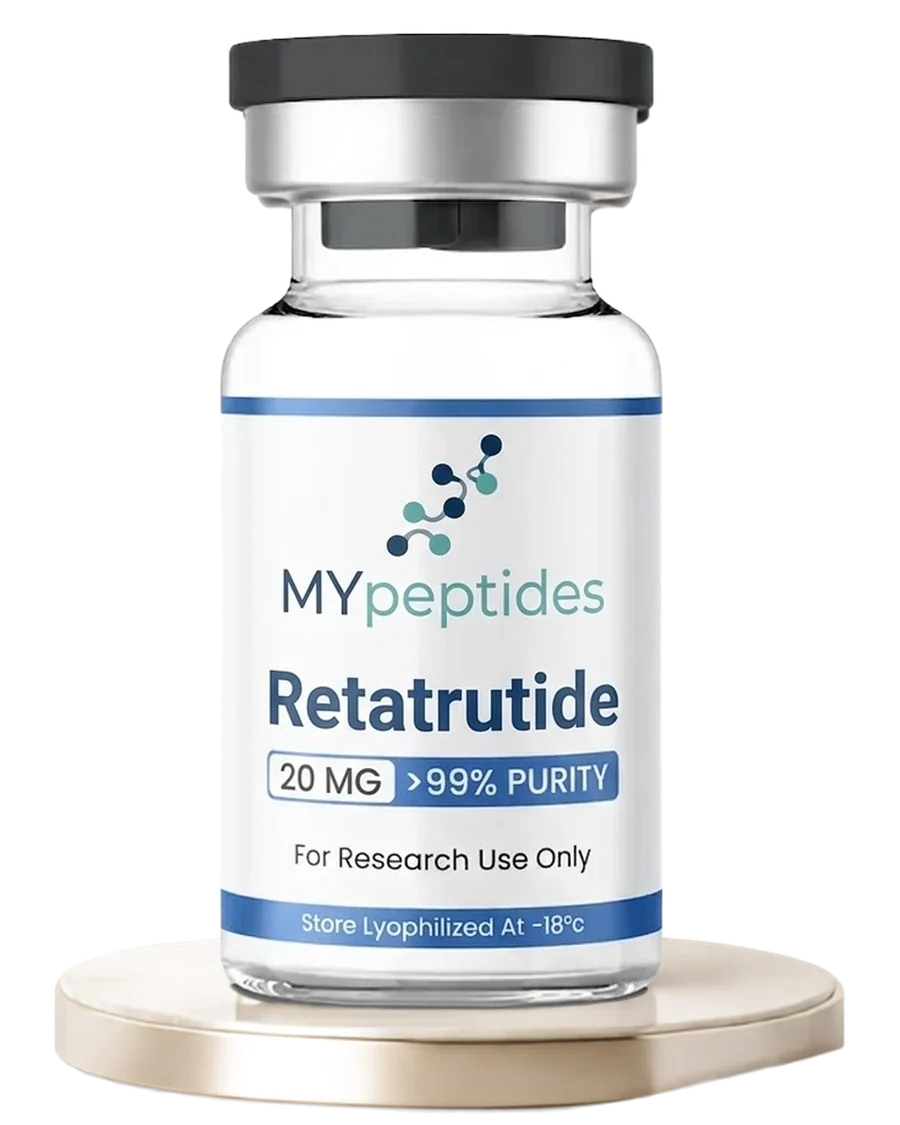
Retatrutide 20 mg vial

Metabolic

The Triple Agonist

Retatrutide

  • 20 mg
  • >99% purity
  • Lyophilised

RM 650

Command your metabolic fire. Retatrutide 20mg activates a triple-action pathway, redefining your relationship with energy and effortless control.

Key mechanisms & benefits

  • It harmonizes appetite and cravings, granting you absolute mastery over hunger and total mental clarity.
  • Its unique glucagon response turns stored energy into sustained vitality, sculpting a leaner, stronger physique.
  • Reclaim your metabolism, shed what no longer serves you, and radiate absolute confidence.
1
Ask about this product

For research use only. Not for human or veterinary consumption. This product is not a medicine and is not intended to diagnose, treat, cure or prevent any disease.

Overview

Three Receptors. One Molecule. The Highest Weight Loss Ever Recorded.

Retatrutide is the only triple agonist of GLP-1, GIP, and Glucagon receptors in active clinical development. In Phase 2, the 12mg dose achieved 24.2% mean body weight reduction at 48 weeks — a figure never previously achieved by any pharmaceutical in a controlled weight loss trial.

Mechanism of action

GLP-1 Receptor

Satiety and Insulin Regulation

Primary appetite suppression and glucose control

  • Activates hypothalamic GLP-1 receptors — reduces appetite signaling
  • Enhances glucose-dependent insulin secretion
  • Slows gastric emptying — prolongs satiety between meals
  • Reduces post-meal glucagon secretion
  • Acts on brainstem reward circuits to reduce food-seeking behavior

GIP Receptor

Metabolic Amplification

Augments and synergizes with GLP-1 receptor activation

  • Potentiates GLP-1 receptor-mediated insulin secretion
  • Improves beta-cell function and insulin sensitivity independently
  • Modulates adipose tissue metabolism and fat storage
  • Reduces nausea side effects associated with GLP-1 alone
  • The tirzepatide advantage — carried through and amplified
Glucagon Receptor

Energy Expenditure

The unique third receptor absent from all currently approved agents

  • Increases basal metabolic rate via hepatic glucagon signaling
  • Drives hepatic glucose output regulation
  • Reduces hepatic lipid content — anti-NAFLD mechanism
  • Elevates thermogenesis beyond what GLP-1/GIP can achieve
  • The mechanism explaining superiority over all dual agonists

Key finding Retatrutide achieved 24.2% mean body weight reduction at 48 weeks (12mg dose, Phase 2) — approximately 2x the magnitude of semaglutide (Wegovy) at its 68-week trial endpoint, achieved in 20 fewer weeks.

Key research findings

24.2%

Mean body weight reduction at 48 weeks in Phase 2 trial, 12mg dose group (n=48)

Jastreboff AM et al. N Engl J Med, 2023
48 weeks

Duration to achieve 24.2% weight loss — 20 weeks fewer than semaglutide needed for 14.9%

Phase 2 NCT04881760
100%

Of the top dose group lost at least 5% body weight — vs 69% for semaglutide

Jastreboff AM et al. N Engl J Med, 2023
Phase 3

Active Phase 3 program initiated — FDA IND granted for obesity indication

ClinicalTrials.gov NCT05394519

Research areas

Obesity & Metabolic Research

The most potent pharmacological weight loss mechanism ever studied — triple receptor activation drives a genuinely unprecedented magnitude of fat loss.

  • Weight loss mechanism research
  • Triple agonist pharmacology studies
  • Metabolic rate and thermogenesis
  • Dose-response relationship studies

Cardiovascular & Lipid

Phase 2 data showed significant improvements in triglycerides, LDL, and cardiovascular risk markers alongside weight loss.

  • Triglyceride and LDL reduction research
  • Cardiovascular risk marker studies
  • Hypertension-obesity interaction
  • Metabolic syndrome models

Liver & Hepatic Health

Glucagon receptor activation uniquely drives hepatic lipid reduction — relevant to NAFLD/NASH research independent of weight loss.

  • NAFLD and NASH research
  • Hepatic lipid clearance studies
  • Liver enzyme normalization
  • Anti-steatotic mechanism research

Endocrine Research

Triple receptor pharmacology offers unique tools for studying GLP-1, GIP, and Glucagon receptor interactions and downstream signaling.

  • Incretins and glucose homeostasis
  • Beta-cell function research
  • GIP receptor pharmacology
  • Glucagon receptor biology

Safety profile

Phase 2 safety profile was consistent with the GLP-1 class — primarily GI effects during dose titration. The glucagon component adds hepatic considerations.

  • Caution
    Gastrointestinal effects

    Nausea, vomiting, diarrhea — consistent with GLP-1 class, primarily during titration

  • Low
    Hypoglycemia

    Glucose-dependent insulin release — hypoglycemia risk low but possible in fasted states

  • Low
    Heart rate

    Mild heart rate increase (2-4 bpm) — consistent with GLP-1 class

  • Low
    Hepatic effects

    Glucagon receptor activation — monitor liver enzymes in sensitive models

Animal studies
Well tolerated across species
Human data
Phase 2 completed 338 subjects
GI tolerability
Consistent with GLP-1 class

Theoretical contraindications in research models

  • Personal or family history of medullary thyroid carcinoma (GLP-1 class concern)
  • Multiple endocrine neoplasia syndrome type 2
  • Active pancreatitis or history of pancreatitis
  • Severe renal or hepatic impairment — insufficient data

Molecular profile

Retatrutide Structure

Generic name
Retatrutide (LY3437943)
Class
GLP-1/GIP/Glucagon triple agonist
Molecular weight
~4,800 Da
CAS number
2381089-83-2
Format
Lyophilized peptide
Route
Subcutaneous injection

Receptor Pharmacology

GLP-1 receptor
Agonist — primary mechanism
GIP receptor
Agonist — amplification
Glucagon receptor
Agonist — thermogenesis
Selectivity
Balanced triple agonism
Half-life
~6 days (once weekly)
Binding affinity
High at all three receptors

MYpeptides specification

Strength
20 mg
Purity
> 99%
Form
Lyophilised powder
Storage
Store lyophilised at −18 °C
Status
For research use only

Frequently asked questions

What makes Retatrutide different from tirzepatide (Mounjaro)?

Tirzepatide is a dual GLP-1 + GIP agonist, approved for type 2 diabetes and obesity. Retatrutide adds a third receptor — glucagon. The glucagon receptor uniquely increases energy expenditure and hepatic lipid clearance, mechanisms entirely absent from tirzepatide. This additional pathway is believed to explain the superior weight loss magnitude.

Is the 24.2% weight loss figure reliable?

Yes. It comes from a peer-reviewed Phase 2 randomized controlled trial published in the New England Journal of Medicine (Jastreboff AM et al., 2023). The trial enrolled 338 participants randomized to placebo or multiple dose cohorts. The 24.2% figure is the mean at 48 weeks in the 12mg dose group.

When will Retatrutide be approved?

Eli Lilly initiated Phase 3 trials (NCT05394519) in 2023. Given typical Phase 3 timelines of 2-3 years plus regulatory review, approval could occur as early as 2026-2027, though this is speculative. The compound is currently available only for research purposes.

Why does the glucagon receptor component add so much?

Glucagon traditionally raises blood sugar and is considered catabolic. However, at the doses used in Retatrutide, glucagon receptor activation primarily affects hepatic lipid metabolism and thermogenesis — it increases calorie burning and clears liver fat. When combined with GLP-1 and GIP (which control the insulin response), the blood sugar effects are counterbalanced while the fat-burning effects are additive.

How does it compare to semaglutide (Wegovy)?

Semaglutide 2.4mg (Wegovy) achieves approximately 14.9% weight loss over 68 weeks. Retatrutide achieved 24.2% over 48 weeks — a meaningfully higher magnitude in fewer weeks. Different trial designs and populations apply, but the directional difference is substantial.

What side effects were seen in Phase 2?

The safety profile was consistent with the GLP-1 class: primarily gastrointestinal effects (nausea, vomiting, diarrhea) concentrated during the dose escalation phase. No serious adverse events were considered drug-related. A mild heart rate increase (2-4 bpm) was observed, consistent with GLP-1 class effects.

References

  1. Tirzepatide Once Weekly for the Treatment of ObesityJastreboff AM et al. (Tirzepatide) N Engl J Med, 2022 · PMID: 35658024
  2. Retatrutide — a GIP, GLP-1, and glucagon receptor agonist for obesityJastreboff AM et al. N Engl J Med, 2023 · PMID: 37351564
  3. Once-Weekly Semaglutide in Adults with Overweight or ObesityWilding JPH et al. N Engl J Med, 2021 · PMID: 33567185
  4. GLP-1 receptor agonists and the pathophysiology of obesityNauck MA, D Meier JJ Nature Reviews Endocrinology, 2021