• 99%+ purity, third-party tested
  • Malaysia-based supplier, fast local delivery
  • Order online, confirm and pay on WhatsApp
  • For research use only
  • 99%+ purity, third-party tested
  • Malaysia-based supplier, fast local delivery
  • Order online, confirm and pay on WhatsApp
  • For research use only

All products are for laboratory research use only. Not for human consumption.

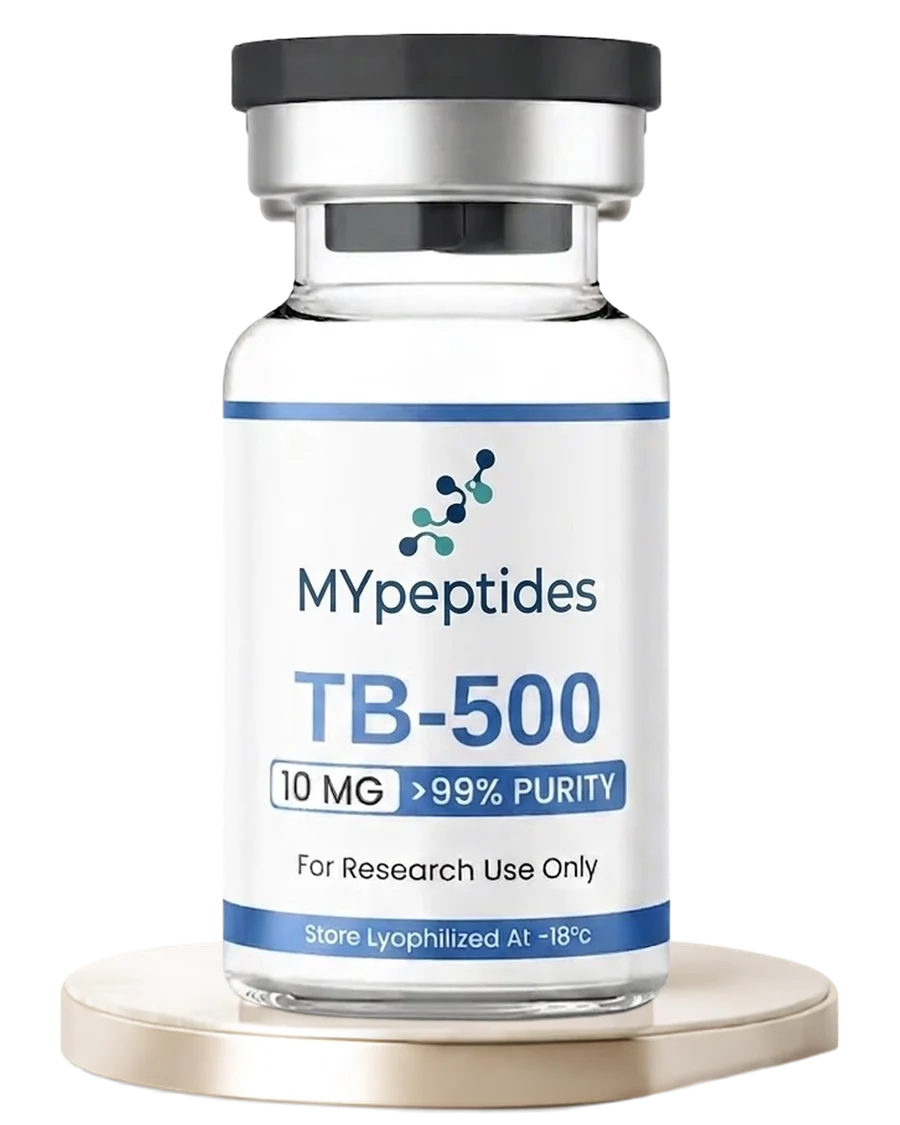
TB-500 10 mg vial

Tissue Repair · Tissue Recovery

The Healing Catalyst

TB-500

  • 10 mg
  • >99% purity
  • Lyophilised

RM 250

Unlock your body’s natural fluidity. TB-500 10mg activates cellular migration, encouraging deep tissue renewal and ageless vitality.

Key mechanisms & benefits

  • It supports rapid muscle recovery and joint flexibility, restoring fluid movement after training or daily stress.
  • By promoting new cellular pathways, it delivers oxygen and nutrients exactly where your body needs to regenerate.
  • TB-500 keeps your tissues supple, your skin vibrant, and your lifestyle beautifully unrestricted.
1
Ask about this product

For research use only. Not for human or veterinary consumption. This product is not a medicine and is not intended to diagnose, treat, cure or prevent any disease.

Overview

The Original Systemic Regenerator — Complete Endogenous Sequence with Phase 2 Cardiac Data

Thymosin Beta-4 (TB-4) is the naturally occurring full-length 43-amino-acid endogenous peptide produced in virtually all nucleated cells. Unlike the TB-500 fragment, TB-4 contains the complete sequence including the N-terminal domain (direct immunomodulation), the C-terminal domain (additional actin regulation), and the ILK-binding domain validated in Phase 2 cardiac trials. Per molecule, it is significantly more potent than the TB-500 fragment.

Mechanism of action

G-Actin Sequestering

Primary Mechanism — Full Coverage

Complete actin-binding regulation across all relevant domains

  • Full-length sequence provides broader actin regulatory activity than fragment
  • N-terminal domain (residues 1-16) — additional actin binding
  • Central LKKTET domain (shared with TB-500) — primary G-actin binding
  • C-terminal domain (residues 24-43) — additional regulatory activity
  • More complete cytoskeletal regulation than the TB-500 fragment alone
Direct Immunomodulation

Unique to Full-Length TB-4

Direct T-cell and macrophage modulation — not present in TB-500

  • Direct T-cell activity modulation documented
  • Macrophage function regulation — both M1 and M2 phenotypes
  • NK cell activity enhancement
  • Thymic epithelial cell interactions (thymus is natural source of TB-4)
  • Immunomodulatory activity not present in TB-500 actin-binding fragment
ILK/Akt Cardiac Protection

Phase 2 Validated Pathway

Integrin-linked kinase activation for cardiac repair — human trial data

  • Binds and activates integrin-linked kinase (ILK) directly
  • ILK activates Akt for cardiomyocyte cell survival signaling
  • Phase 2 cardiac trial completed — cardiomyocyte migration enhancement
  • Reduces cardiac fibrosis versus control in MI models
  • Bock-Marquette Nature 2004: ILK activation mechanism published

Key finding TB-4 full-length activates integrin-linked kinase (ILK), which drives cardiac cell migration and survival after injury. This mechanism was published in Nature (2004) and validated in Phase 2 clinical trials — representing the strongest cardiac repair evidence of any tissue repair peptide.

Key research findings

ILK

TB-4 directly binds and activates integrin-linked kinase (ILK) — driving cardiac cell migration and survival

Bock-Marquette I et al. Nature, 2004
Phase 2

TB-4 completed Phase 2 cardiac trial demonstrating cardiomyocyte migration and cardiac repair enhancement

Cardiac Phase 2 data
Immunomodulation

Full-length TB-4 directly modulates T-cell and macrophage activity — activity absent from TB-500 fragment

Goldstein AL et al. Expert Opin Biol Ther, 2012
Myelination

Full-length TB-4 promotes oligodendrocyte differentiation and myelin formation — not replicated by fragment

Hannappel E. Ann N Y Acad Sci, 2007

Research areas

Cardiac Research

The strongest cardiac repair peptide data available — Phase 2 clinical data validating the ILK/Akt mechanism published in Nature.

  • Cardiac ischemia repair research
  • Cardiomyocyte migration studies
  • ILK/Akt pathway research
  • Post-MI cardiac repair models

Immunological Research

Direct immunomodulatory activity unique to full-length TB-4 — not available with TB-500 fragment.

  • T-cell activity research
  • Macrophage polarization studies
  • Immune modulation research
  • Thymic biology research

Neural Regeneration

Full-length TB-4 promotes oligodendrocyte differentiation and myelination — neural repair activity beyond TB-500.

  • Oligodendrocyte differentiation research
  • Myelination studies
  • Neural repair research
  • Multiple sclerosis models

Systemic Tissue Repair

Complete actin regulatory sequence with broader tissue coverage than the TB-500 fragment.

  • Multi-tissue repair protocols
  • Tendon and muscle research
  • Systemic regeneration studies
  • Anti-fibrotic research

Safety profile

TB-4 full-length has the same general safety profile as TB-500, with additional immunomodulatory activity to consider. Phase 2 cardiac trial safety data available.

  • Caution
    Pro-angiogenic

    VEGFR2 and angiogenic activity — note in oncology research contexts

  • Low
    Immunomodulation

    Direct immune cell modulation — additional to TB-500 activity

  • Low
    Cardiac activity

    ILK pathway activation — account for cardiac signaling in research designs

  • Low
    WADA prohibition

    Prohibited by WADA — S0 category applies to TB-4 and all fragments

Animal studies
Well tolerated — no toxicity findings
Human data
Phase 2 cardiac trial completed
Endogenous
Present in all nucleated cells

Theoretical contraindications in research models

  • Active malignancy — pro-angiogenic and immunomodulatory activity
  • Pregnancy or breastfeeding — insufficient data
  • WADA-prohibited — banned in competitive sport (S0)

Molecular profile

TB-4 Full Length Structure

Full name
Thymosin Beta-4
Sequence
SDKPDMAEIEKFDKSKLKKTETQEKNPLPSKETIEQEKQAGES
Amino acids
43
Molecular weight
4,963 Da
CAS number
77591-33-4
Origin
Endogenous — all nucleated cells

Comparison with TB-500

Sequence
Full 43AA vs fragment only
Immunomodulation
Yes vs No
Cardiac Phase 2
Yes vs No
Per-molecule potency
Higher vs Lower
ILK binding
Direct vs Indirect

MYpeptides specification

Strength
10 mg
Purity
> 99%
Form
Lyophilised powder
Storage
Store lyophilised at −18 °C
Status
For research use only

Frequently asked questions

What is the ILK mechanism and why does it matter for cardiac research?

Integrin-linked kinase (ILK) is a serine-threonine kinase that acts downstream of integrins at cell adhesion sites. TB-4 directly binds and activates ILK, which then phosphorylates Akt (a master cell survival kinase). In cardiac tissue, ILK/Akt activation drives cardiomyocyte survival after ischemia and promotes cell migration for cardiac repair. This mechanism was published in Nature in 2004 by Bock-Marquette et al.

What specific immunomodulatory activities does TB-4 have that TB-500 lacks?

TB-4 directly modulates T-cell differentiation and activation, macrophage polarization between M1 (inflammatory) and M2 (repair) phenotypes, and NK cell activity. These effects are mediated by the N-terminal and C-terminal domains of TB-4 that are not present in the LKKTET actin-binding fragment (TB-500). The thymus is the primary natural source of TB-4 — consistent with immunomodulatory function.

Has TB-4 been studied in humans?

TB-4 completed a Phase 2 clinical trial for cardiac repair in patients who had experienced myocardial infarction. The trial evaluated TB-4’s ability to promote cardiac repair via the ILK/Akt pathway. Safety and efficacy data from this trial are available. Multiple earlier human studies focused on wound healing applications.

References

  1. Thymosin beta4 activates integrin-linked kinase and promotes cardiac cell migrationBock-Marquette I et al. Nature, 2004 · PMID: 15565145
  2. Thymosin beta4: a multi-functional regenerative peptideGoldstein AL, Hannappel E et al. Expert Opin Biol Ther, 2012 · PMID: 22074294
  3. The role of thymosin beta4 in the adult and developing brainHannappel E Ann N Y Acad Sci, 2007 · PMID: 17401041
  4. Thymosin beta4 reduces infarct volume in ratsMorris DC et al. Stroke, 2006 · PMID: 16456117