• 99%+ purity, third-party tested
  • Malaysia-based supplier, fast local delivery
  • Order online, confirm and pay on WhatsApp
  • For research use only
  • 99%+ purity, third-party tested
  • Malaysia-based supplier, fast local delivery
  • Order online, confirm and pay on WhatsApp
  • For research use only

All products are for laboratory research use only. Not for human consumption.

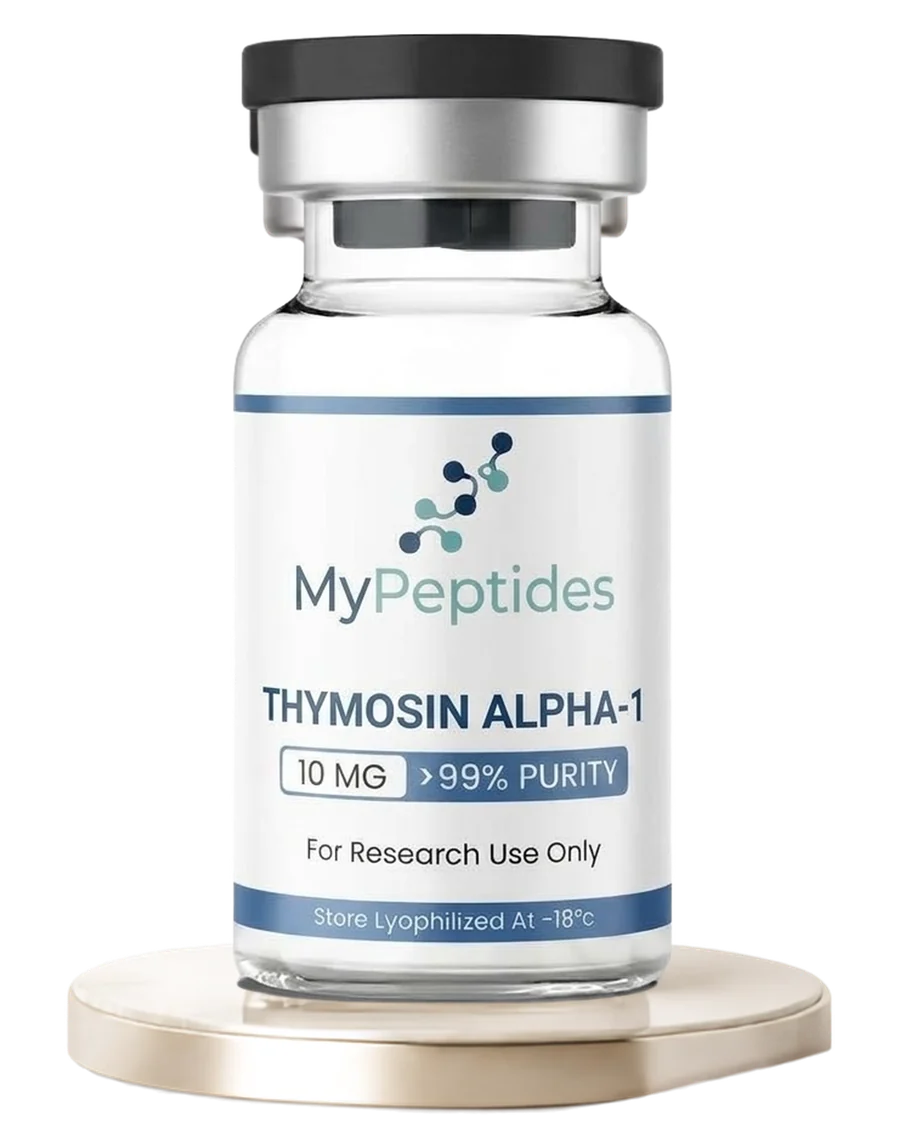
Thymosin Alpha-1 10 mg vial

Immune · Immune Defense

The Immune Shield

Thymosin Alpha-1

  • 10 mg
  • >99% purity
  • Lyophilised

RM 350

Fortify your sovereign shield. Thymosin Alpha-1 10 mg balances your body’s natural immune intelligence from the cell up.

Key mechanisms & benefits

  • It trains cellular defenses to navigate daily stressors, keeping your energy vibrant and uninterrupted.
  • Stay fiercely protected during travel or high-stress seasons, moving through your world with absolute confidence.
  • By gently modulating immune responses, it prevents system fatigue and ensures pure, steady vitality.
1
Ask about this product

For research use only. Not for human or veterinary consumption. This product is not a medicine and is not intended to diagnose, treat, cure or prevent any disease.

Overview

The Most Clinically Validated Immunomodulator — 40 Years, 35+ Countries

Thymosin Alpha-1 (Ta1) has accumulated the most comprehensive clinical evidence base of any peptide immunomodulator. FDA Orphan Drug designation. Approved as Zadaxin in 35+ countries for hepatitis B, hepatitis C, and immune reconstitution. Discovered in 1977 by Allan Goldstein, it activates dendritic cells, upregulates T cell function, and modulates cytokine signaling without causing autoimmune overstimulation.

Mechanism of action

Dendritic Cell Activation

Primary Mechanism — Innate Immunity

Dendritic cell maturation and antigen presentation amplification

  • Activates plasmacytoid dendritic cells (pDC) — IFN-a producers
  • Promotes conventional dendritic cell maturation and MHC II upregulation
  • Enhances antigen presentation to naive T cells — amplifies adaptive response
  • Upregulates Toll-like receptor (TLR-9) signaling in dendritic cells
  • Drives dendritic cell migration to lymph nodes for T cell priming
T Cell Activation

Adaptive Immunity Enhancement

CD4+, CD8+, and NK cell differentiation and activation

  • CD4+ Th1 differentiation — cell-mediated immunity driver
  • CD8+ cytotoxic T cell activity enhancement (anti-viral, anti-tumor)
  • NK cell cytotoxic activity potentiation
  • Regulatory T cell (Treg) balance maintenance — avoids autoimmunity
  • Restores T cell function in immunocompromised states
Cytokine Modulation

Immune Signaling Optimization

IFN-gamma and IL-2 upregulation for immune response amplification

  • IFN-gamma elevation — primary antiviral and antitumor cytokine
  • IL-2 upregulation — T cell proliferation and survival
  • TNF-alpha modulation in immunosuppressed states
  • Downregulates pro-inflammatory cytokines in autoimmune models
  • Restores Th1/Th2 cytokine balance in dysregulated immune states

Key finding Thymosin Alpha-1 is the only immunomodulatory peptide with completed randomized controlled trials across four independent disease categories (hepatitis B, hepatitis C, cancer adjuvant therapy, and sepsis) — and the only peptide immunomodulator approved in 35+ countries with FDA Orphan Drug status.

Key research findings

35+

Countries where Zadaxin is approved for hepatitis B, hepatitis C, and immune reconstitution indications

Zadaxin global prescribing information
HBV

Thymosin Alpha-1 significantly increased HBV DNA clearance and HBeAg seroconversion in 255-patient Phase 3 RCT

Mutchnick MG et al. Hepatology, 1991
Cancer

Improved immune function and quality of life as adjuvant to chemotherapy — multiple oncology RCTs completed

Garaci E et al. Expert Opin Biol Ther, 2007
Sepsis

Thymosin Alpha-1 improved 28-day mortality in severe sepsis — multiple clinical studies in China

Wu J et al. Crit Care Med, 2013

Research areas

Oncology and Immune Support

The most validated immunomodulator for cancer adjuvant therapy — improves chemotherapy outcomes and immune reconstitution.

  • Cancer adjuvant immunotherapy research
  • Chemotherapy immune support
  • Tumor immunity research
  • NK cell activity studies in oncology

Viral Infection Research

FDA Orphan Drug status and Phase 3 data for hepatitis B and C — the deepest antiviral evidence of any peptide immunomodulator.

  • Hepatitis B and C research models
  • Antiviral innate immunity research
  • IFN-gamma production studies
  • Viral clearance mechanism research

Sepsis and Critical Illness

Reduced 28-day mortality in severe sepsis in clinical studies — unique critical illness immunomodulation data.

  • Sepsis immune dysfunction research
  • Critical illness immunocompromise
  • Immunoparalysis reversal models
  • ICU immune support research

Vaccine and Adjuvant Research

Thymosin Alpha-1 potentiates vaccine responses — established as a clinical vaccine adjuvant in multiple settings.

  • Vaccine adjuvant research
  • Immune response potentiation
  • Elderly vaccine response improvement
  • Immunosenescence reversal models

Safety profile

Thymosin Alpha-1 has the most comprehensive human safety database of any peptide immunomodulator — 40+ years and 35+ countries of clinical use.

  • Low
    Immune potentiation

    Amplifies immune responses — note in autoimmune-prone research models

  • Low
    Cytokine elevation

    IFN-gamma and IL-2 elevation — note in cytokine-sensitive models

  • Low
    Dendritic cell activation

    Enhanced antigen presentation — may amplify existing immune reactions

  • Low
    Drug interactions

    May potentiate immunosuppressive or immunostimulatory treatments

Animal studies
Extensively characterized
Human data
40+ years, 35+ countries
Autoimmune risk
Not documented in clinical literature

Theoretical contraindications in research models

  • Known allergy to thymic peptides
  • Concurrent immunosuppressive therapy — mechanistic conflict
  • Organ transplant recipients on rejection prevention therapy
  • Active autoimmune disease — may potentiate immune activity

Molecular profile

Thymosin Alpha-1 Structure

Full name
Thymosin Alpha-1 (Ta1)
Sequence
Ac-SDAAVDTSSEITTKDLKEKKEVVEEAEN
Amino acids
28
Molecular weight
3,108 Da
CAS number
62304-98-7
N-terminus
N-acetylated (endogenous modification)

Clinical Approvals

Brand name
Zadaxin (SciClone Pharmaceuticals)
Hepatitis B
Approved 35+ countries
Hepatitis C
Approved (with interferon)
Cancer adjuvant
Approved in multiple countries
FDA status
Orphan Drug designation
Discovery
Goldstein AL, 1977

MYpeptides specification

Strength
10 mg
Purity
> 99%
Form
Lyophilised powder
Storage
Store lyophilised at −18 °C
Status
For research use only

Frequently asked questions

What conditions is Zadaxin (Thymosin Alpha-1) approved for?

Zadaxin is approved in 35+ countries for: (1) Hepatitis B — as monotherapy and in combination; (2) Hepatitis C — in combination with interferon; (3) Adjuvant to chemotherapy in cancer treatment; (4) Immune reconstitution in immunocompromised patients. It carries FDA Orphan Drug designation in the United States.

How is Thymosin Alpha-1 different from Thymosin Beta-4?

Despite similar names, they are entirely different peptides with completely different mechanisms. Thymosin Alpha-1 (28 AA, molecular weight 3,108 Da) is an immunomodulator — it activates dendritic cells, T cells, and NK cells. Thymosin Beta-4 (43 AA, molecular weight 4,963 Da) is a tissue repair peptide that sequesters G-actin to enable cell migration. They do not share mechanism, receptor, or clinical application.

What did the hepatitis B Phase 3 trial find?

The pivotal 255-patient Phase 3 RCT (Mutchnick MG et al., Hepatology, 1991) demonstrated that Thymosin Alpha-1 significantly increased HBV DNA clearance and HBeAg seroconversion versus placebo over a 12-month treatment period. This trial formed the basis for regulatory approvals in multiple countries.

Why is it useful in sepsis?

Sepsis causes immune paralysis — a state where T cells and dendritic cells become exhausted and unable to fight infection. Thymosin Alpha-1 reverses this immunoparalysis by restoring dendritic cell and T cell function. Chinese clinical studies showed improved 28-day survival in severe sepsis patients treated with Thymosin Alpha-1 versus standard care.

How does Thymosin Alpha-1 avoid causing autoimmunity?

Unlike non-specific immune stimulants, Thymosin Alpha-1 restores immune balance rather than simply amplifying all immune activity. It upregulates regulatory T cells (Tregs) alongside effector T cells, maintaining immune homeostasis. In 40+ years of clinical use across millions of doses, autoimmune complications have not been a documented safety concern.

Can Thymosin Alpha-1 improve vaccine responses?

Yes. Multiple clinical studies have demonstrated that Thymosin Alpha-1 potentiates vaccine responses — particularly in elderly subjects and immunocompromised patients whose normal immune response to vaccination is diminished. This has been studied with influenza and hepatitis B vaccines.

References

  1. Thymosin alpha1 treatment of chronic hepatitis BMutchnick MG et al. Hepatology, 1991 · PMID: 2045783
  2. Thymosin alpha1 in the treatment of cancerGaraci E et al. Expert Opin Biol Ther, 2007 · PMID: 17705684
  3. Thymosin alpha1 for severe sepsis: a systematic reviewWu J et al. Crit Care Med, 2013 · PMID: 23518878
  4. Thymosin alpha1: biological activities and clinical applicationsLiu Y et al. Curr Protein Pept Sci, 2015 · PMID: 26031307
Immune

The Anti-Inflammatory Specialist

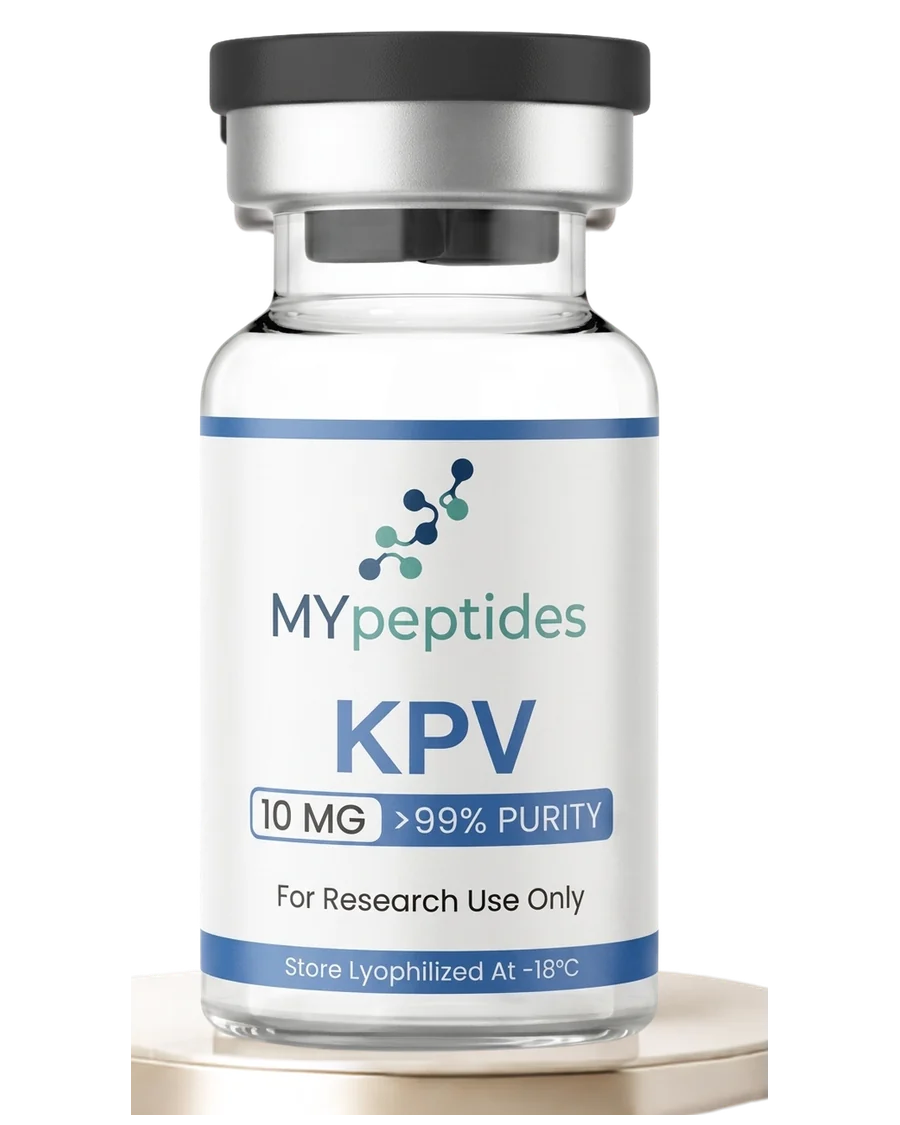
KPV

10 mg · >99% purity

RM 250